How to Evaluate Recipe Labor: Choosing the Right Level of Scratch Cooking
Senior living and healthcare dining teams are often asked to do more with less: serve appealing meals, meet nutrition and therapeutic diet needs, maintain consistency, and manage labor within a limited staffing model. One practical way to balance these demands is to evaluate recipes by the level of labor and culinary skill they require.
Not every menu item needs to be made completely from scratch. In fact, the most effective menu programs often use a thoughtful mix of ready-to-use products, semi-scratch preparation, and scratch cooking. The goal is not to choose one approach for every recipe. It is to select the right approach for your team, your staffing realities, and the dining experience you want to provide.
Start With the Labor Behind the Recipe
A recipe may look simple on paper, but its labor demands can vary significantly depending on the ingredients, preparation steps, and skill level required. Evaluating recipes through a labor lens can help culinary leaders make more informed purchasing, menu planning, and production decisions.
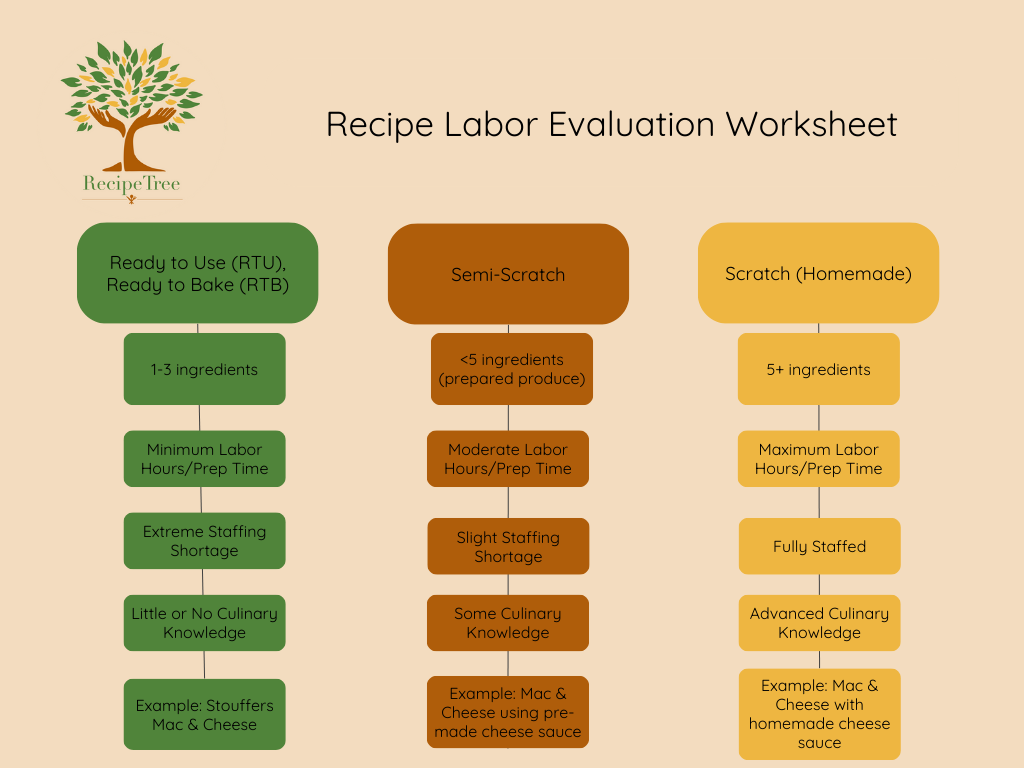
Consider three common recipe categories: ready-to-use or ready-to-bake, semi-scratch, and scratch-made.
Ready-to-Use and Ready-to-Bake Recipes
Ready-to-use (RTU) and ready-to-bake (RTB) products are designed to require minimal preparation. These recipes often use one to three ingredients and are especially helpful when teams are experiencing significant staffing shortages, limited prep time, or inconsistent culinary skill levels.
This category can be a valuable solution for communities that need to maintain dependable meal service while reducing the number of production steps required of the kitchen team.
A prepared macaroni and cheese entrée, such as Stouffer’s Mac & Cheese, is one example. The product can be heated and served with limited labor, making it a practical option when staffing is stretched.
Ready-to-use items can help teams preserve time and energy for other high-impact menu components, such as fresh vegetables, resident-favorite desserts, or special-event meals.
Semi-Scratch Recipes: A Practical Middle Ground
Semi-scratch cooking combines convenience products with fresh or prepared ingredients to create a dish that feels more customized while keeping labor manageable. These recipes generally use fewer than five ingredients and may include prepared produce, pre-made sauces, or other labor-saving components.
Semi-scratch recipes are often a strong fit for communities with slight staffing shortages or teams that have some culinary knowledge but may not have the time or resources to prepare every component from the ground up.
For example, macaroni and cheese made with pasta and a pre-made cheese sauce may offer a more personalized presentation than a fully prepared entrée while still requiring less labor than a homemade cheese sauce.
This approach gives teams flexibility. It can allow for flavor adjustments, portion control, ingredient substitutions, and menu variety without requiring the full labor commitment of scratch cooking.
Scratch Cooking: When the Resources Are Available
Scratch-made recipes typically involve five or more ingredients and require the greatest amount of prep time, labor hours, and culinary knowledge. These recipes may include multiple preparation steps, sauces made from basic ingredients, knife work, cooking techniques, and careful quality control.
Scratch cooking is often best suited for fully staffed teams with advanced culinary skills and enough production time to execute recipes consistently.
A macaroni and cheese recipe made with a homemade cheese sauce is one example. While it may offer a more distinctive flavor and greater control over ingredients, it also requires more time, skill, and attention to ensure consistent results.
Scratch cooking can be a meaningful part of a dining program, especially when used for signature dishes, seasonal menus, special events, or resident favorites. However, it should be evaluated realistically against the labor resources available on a given day.
Use a Flexible Approach to Menu Planning
The strongest menu programs do not rely exclusively on convenience foods or scratch cooking. Instead, they build a balanced production plan.
A community may choose ready-to-use products for high-volume or labor-intensive meal periods, semi-scratch recipes for everyday variety, and scratch-made dishes for meals where the extra effort will have the greatest impact. This approach can help teams protect quality while avoiding burnout.
When evaluating a recipe, consider the number of ingredients, required prep time, staffing availability, culinary skill level, equipment needs, and the importance of the item to the resident dining experience. These factors can help determine whether a recipe is best prepared using ready-to-use, semi-scratch, or scratch-made methods.
Consistency Matters at Every Labor Level
No matter which preparation method is selected, standardized recipes remain essential. Clear recipes help teams produce consistent portions, flavor, texture, food safety practices, and nutrition outcomes.
They also make it easier to train new staff, scale recipes to census, manage food costs, and adapt menu items when staffing changes. A well-organized recipe system can help teams make confident decisions about when to simplify production and when to invest additional labor in a signature dish.
The right recipe is not always the one with the most ingredients or the most complex process. It is the recipe that your team can prepare safely, consistently, and successfully while supporting a positive dining experience for residents.
The Recipe Labor Evaluation Worksheet provides a simple framework for comparing ready-to-use, semi-scratch, and scratch-made recipes based on ingredients, labor, staffing, culinary knowledge, and a macaroni-and-cheese example.