Do You Know the Difference? A Guide to Common Corn Products
Corn is a familiar ingredient in kitchens everywhere, but the many forms it takes can make selecting the right product feel more complicated than it needs to be. While hominy, masa, cornmeal, grits, and cornstarch all begin with corn kernels, their processing methods, textures, and best uses are very different.
For culinary professionals, understanding these distinctions can help support recipe consistency, improve menu variety, and ensure the right ingredient is used for the intended result.
Hominy
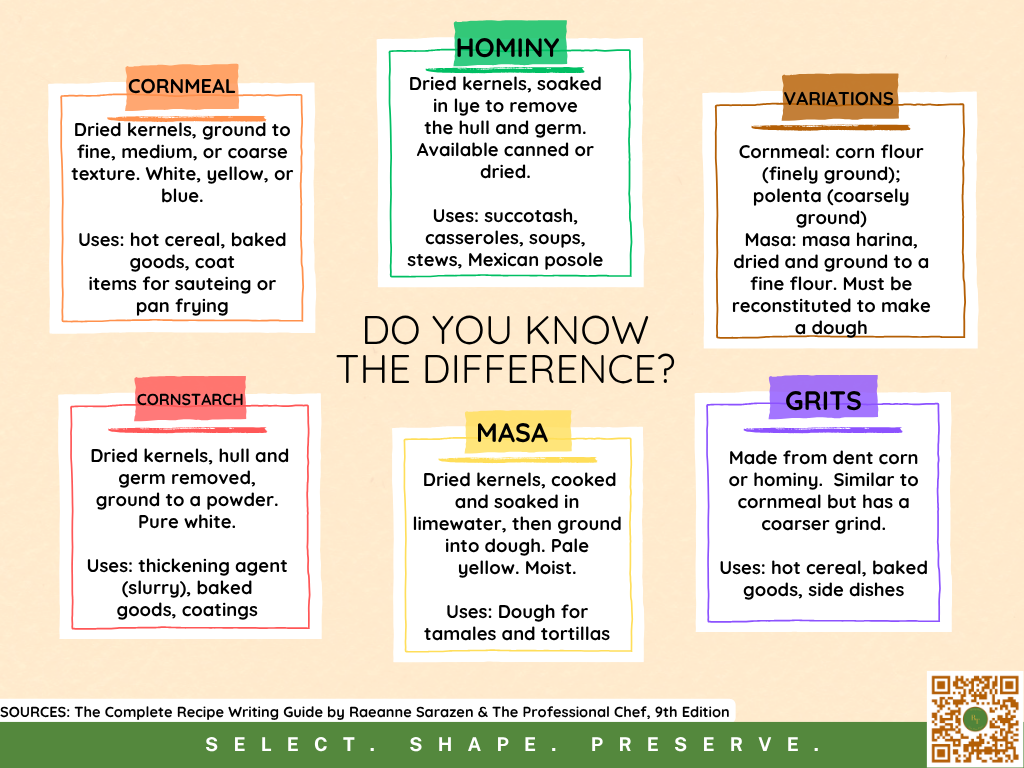
Hominy is made from dried corn kernels that have been soaked in an alkaline solution, traditionally lye or limewater. This process removes the hull and germ while creating a softer texture and distinctive flavor.
Hominy is available canned or dried and is often used in hearty, comforting dishes. It works especially well in succotash, casseroles, soups, stews, and Mexican-style posole.
Because of its tender texture and mild corn flavor, hominy can be a versatile addition to menus that feature regional, cultural, or seasonal comfort foods.
Cornmeal
Cornmeal is made by grinding dried corn kernels into a fine, medium, or coarse texture. It may be white, yellow, or blue, depending on the type of corn used.
Cornmeal is a flexible pantry staple that can be used for hot cereal, baked goods, breading, coatings for sautéed or pan-fried foods, and more.
There are several common variations of cornmeal:
- Corn flour is very finely ground cornmeal.
- Polenta is generally a more coarsely ground corn product and is often prepared as a creamy side dish or allowed to set before slicing and cooking.
The grind of the cornmeal matters. Fine cornmeal creates a smoother result, while medium and coarse grinds add more texture to baked goods, coatings, and side dishes.
Cornstarch
Cornstarch is made from dried corn kernels that have had the hull and germ removed before being ground into a very fine, pure white powder.
Unlike cornmeal or grits, cornstarch is not typically used for its flavor or texture. Instead, it is primarily used as a thickening agent.
Cornstarch is commonly mixed with a cold liquid to create a slurry before being added to soups, sauces, gravies, and other hot preparations. It can also be used in baked goods and as a coating for certain foods.
For best results, add cornstarch slurry gradually and stir well to prevent lumps. Keep in mind that overcooking or extended holding can affect the thickness of cornstarch-thickened products.
Masa
Masa is made from dried corn kernels that have been cooked and soaked in limewater before being ground into a moist dough. This traditional process, called nixtamalization, gives masa its pale yellow color, distinctive flavor, and pliable texture.
Fresh masa is most often used to make tamales and tortillas.
A related product, masa harina, is dried masa that has been ground into a fine flour. Masa harina must be reconstituted with water before it can be made into dough.
Masa can be a wonderful ingredient for menus featuring Mexican and Latin American-inspired dishes, offering an opportunity to celebrate culture while introducing familiar and flavorful menu items.
Grits
Grits are made from dent corn or hominy and are similar to cornmeal, but they have a coarser grind.
They are most commonly served as a hot cereal or side dish, but they can also be used in baked goods and savory recipes. Their creamy texture makes them especially popular in Southern cuisine.
Grits can be prepared simply as a breakfast option or elevated with cheese, herbs, vegetables, or proteins for a more substantial meal component.
Corn Ingredients and IDDSI Texture-Modified Diets
Corn products can be useful ingredients in texture-modified menus, but they require careful attention to particle size, consistency, moisture, and the specific IDDSI level prescribed for each resident or patient.
Whole corn kernels, including hominy, are often challenging for individuals with dysphagia because their skins can be difficult to break down and may separate from the softer interior. Whole kernels may not be appropriate for many texture-modified diets unless they are processed and tested to meet the required IDDSI level.
For minced and moist or soft and bite-sized diets, corn-based dishes should be evaluated carefully for particle size, tenderness, and moisture. Corn kernels, hominy, and coarse preparations such as polenta or grits may need additional cooking, chopping, blending, or moisture to achieve the appropriate texture. Dry, crumbly, sticky, or separated textures should be avoided when they do not meet the individual’s prescribed diet level.
Cornmeal, corn flour, masa harina, and cornstarch can be especially helpful in texture-modified cooking because they may be used to adjust consistency. Fine cornmeal or corn flour may be incorporated into soft baked items, porridges, or pureed preparations when fully hydrated and smooth. Masa harina can help create smooth, cohesive corn-based dishes when properly hydrated and blended.
Cornstarch may be used to thicken soups, sauces, gravies, and pureed foods. However, cornstarch-thickened foods should be tested after preparation and again after holding, as consistency can change over time. A product that appears appropriate immediately after cooking may become thinner, thicker, or less stable as it cools or sits.
For pureed diets, corn-based foods should be blended until completely smooth, without skins, hulls, coarse particles, or lumps. Additional liquid, sauce, broth, milk, or other appropriate ingredients may be needed to create a smooth and cohesive puree. Straining may also be necessary, especially when working with whole corn, hominy, or coarse cornmeal products.
As with all texture-modified foods, the final preparation, not the ingredient alone, determines whether a dish meets an IDDSI level. Teams should follow the resident or patient’s prescribed diet order, use the appropriate IDDSI testing methods, and document standardized preparation procedures to support consistent results.
Choosing the Right Corn Product
When selecting a corn product for a recipe, consider the role it plays in the finished dish.
Use hominy when you want whole kernels with a soft texture in soups, stews, casseroles, or cultural dishes. Choose cornmeal when you need ground corn for baking, hot cereal, breading, or coatings. Reach for cornstarch when a recipe needs thickening. Use masa for tortillas, tamales, and other traditional dough-based preparations. Select grits when you want a coarser ground corn product for creamy cereals, side dishes, or Southern-inspired recipes.
When preparing recipes for texture-modified diets, select the corn product that will best support the desired final consistency. Fine, fully hydrated, and smooth corn products are often easier to adapt than whole kernels or coarse-ground products. Always test the finished recipe to confirm it meets the intended IDDSI level.
Each form of corn brings something different to the table. By understanding how these products are processed and where they work best, culinary teams can build more intentional recipes, improve consistency, support texture-modified diet needs, and bring greater variety to their menus.
RecipeTree recipes are intended as guidelines. Each community is responsible for preparing and testing foods to ensure they meet the prescribed IDDSI level for the individual being served.
Sources: The Complete Recipe Writing Guide by Raeanne Sarazen, The Professional Chef, 9th Edition, and IDDSI Framework resources.