Bringing the Caribbean to the Table: Celebrating Culture Through Dining in Senior Living
Food has an extraordinary ability to connect people to their heritage, family traditions, and cherished memories. For older adults living in senior living communities, culturally familiar meals provide more than nutrition; they offer comfort, dignity, and a sense of belonging.
As senior living populations become increasingly diverse, incorporating Caribbean-inspired foods into the dining program is an excellent way to embrace person-centered care while introducing vibrant flavors that everyone can enjoy.
Understanding Caribbean Cuisine
Caribbean cuisine reflects a rich blend of African, Indigenous, European, and Asian influences. The result is a colorful culinary tradition built around fresh produce, hearty grains, legumes, seafood, and bold herbs and spices.
Whether residents grew up in Jamaica, Trinidad and Tobago, Barbados, Puerto Rico, the Dominican Republic, or another Caribbean nation, familiar flavors can evoke lifelong memories and create meaningful dining experiences.
Build Menus Around Traditional Ingredients
Authenticity begins with ingredients. Many Caribbean staples are already available through foodservice distributors and can easily be incorporated into seasonal menus.
Colorful Fruits
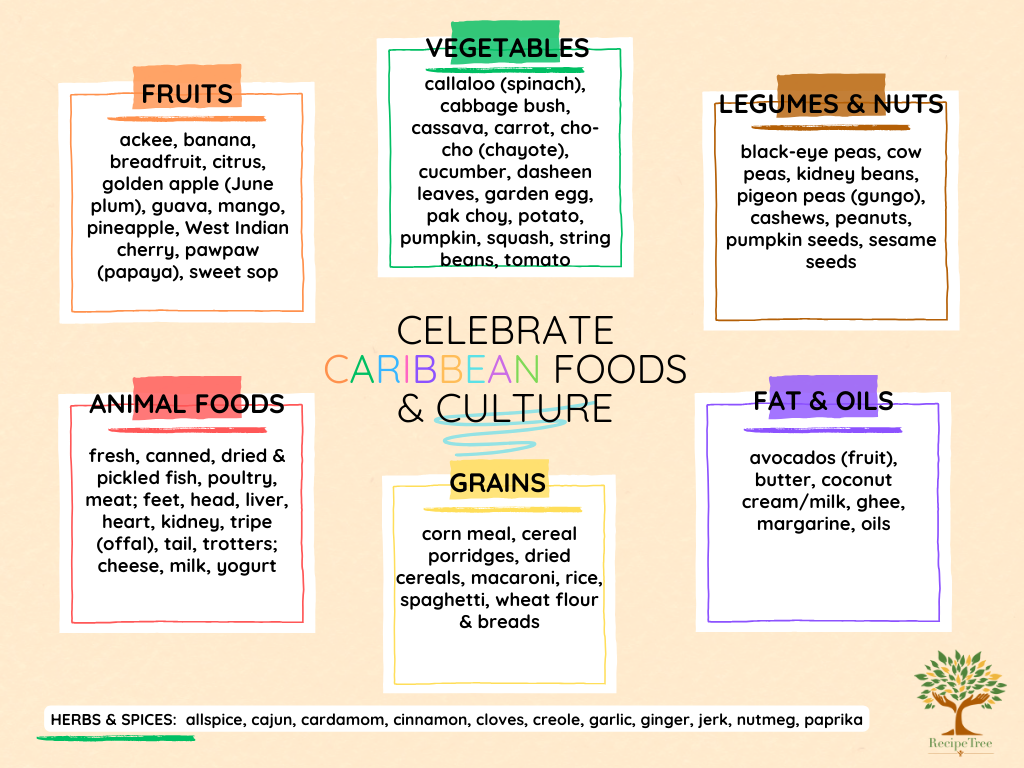
Caribbean cuisine celebrates tropical fruits that add both flavor and nutrition, including:
- Bananas
- Mangoes
- Pineapple
- Guava
- Papaya (pawpaw)
- Breadfruit
- Ackee
- Citrus fruits
- June plum (golden apple)
- West Indian cherry
These fruits can be featured in fresh fruit cups, smoothies, desserts, breakfast offerings, or savory dishes.
Nutrient-Dense Vegetables
Traditional vegetables provide fiber, vitamins, and vibrant color while supporting menu variety.
Popular selections include:
- Callaloo
- Cassava
- Chayote (cho-cho)
- Pumpkin
- Squash
- Pak choy
- Tomatoes
- Green beans
- Potatoes
- Cabbage
- Cucumbers
- Carrots
Many of these ingredients work beautifully in soups, stews, side dishes, and vegetarian entrées.
Legumes and Whole Grains
Beans and grains are the foundation of many Caribbean meals and provide excellent sources of plant protein and fiber.
Common choices include:
- Kidney beans
- Black-eyed peas
- Pigeon peas (gungo peas)
- Cowpeas
- Rice
- Cornmeal
- Macaroni
- Breads
- Breakfast porridges
Classic rice and peas remains one of the most recognizable Caribbean comfort foods and can easily be adapted for senior living menus.
Protein Choices
Caribbean cuisine embraces a wide variety of protein sources, including:
- Fresh and dried fish
- Poultry
- Beef and pork
- Cheese
- Milk and yogurt
Traditional cuisines may also include organ meats and other specialty proteins that hold deep cultural significance for many residents.
Flavor Without Compromise
One of the defining characteristics of Caribbean cuisine is its bold seasoning.
Rather than relying solely on salt, authentic recipes build flavor with herbs and spices such as:
- Allspice
- Garlic
- Ginger
- Nutmeg
- Cinnamon
- Cloves
- Cardamom
- Paprika
- Cajun and Creole seasoning blends
- Jerk seasoning
These aromatic ingredients create memorable meals while supporting reduced-sodium cooking strategies that align with many therapeutic diets.
Honoring Residents Through Culturally Familiar Foods
Serving culturally familiar foods demonstrates respect for each resident's personal history. A favorite family recipe or recognizable flavor profile can spark conversation, encourage appetite, and foster social connections around the dining table.
For residents living with dementia, these familiar foods may be especially meaningful. While recent memories often fade, long-term memories, including those associated with traditional foods and family meals, can remain surprisingly resilient. Offering culturally familiar dishes may help reduce mealtime anxiety while creating moments of recognition and comfort.
Bringing Caribbean Cuisine into Your Dining Program
Introducing Caribbean-inspired meals doesn't require a complete menu overhaul. Small changes can make a big impact.
Consider:
- Featuring a Caribbean-inspired entrée as a monthly or weekly special.
- Celebrating Caribbean Heritage Month in June with themed menus and educational programming.
- Offering tropical fruit desserts or smoothies.
- Pairing traditional recipes with resident stories and cultural celebrations.
- Inviting residents and families to share favorite recipes that can be adapted for foodservice production.
These initiatives help transform dining from a routine service into an engaging, person-centered experience.
The Lasting Impact of Cultural Dining
Exceptional senior living dining goes beyond meeting nutritional requirements. It honors the lives, cultures, and traditions of the people we serve.
By incorporating Caribbean foods and flavors into the menu, culinary teams create opportunities for residents to reconnect with cherished memories, celebrate their heritage, and enjoy meals that feel both familiar and meaningful.
Because in senior living, every meal is an opportunity to nourish not only the body, but also the heart, the memories, and the rich cultural stories that make each resident unique.