The Essential Elements of a Standardized Recipe
In senior living and healthcare dining, recipes do far more than tell a cook what ingredients to use. A well-written, standardized recipe is a practical tool for delivering consistent quality, supporting resident satisfaction, managing food costs, and helping staff prepare meals with confidence.
When key recipe details are missing, even a favorite menu item can produce inconsistent results. Portions may vary, ingredients may be measured differently, therapeutic diet needs may be overlooked, and teams may overproduce food. A standardized recipe helps reduce these risks by giving every team member a clear, repeatable process to follow.
What Is a Standardized Recipe?
A standardized recipe is a recipe that has been tested, documented, and designed to produce the same result every time it is prepared. It includes the information needed for a team to make the recipe consistently, regardless of who is working in the kitchen.
For healthcare and senior living communities, standardized recipes are especially important because meals often need to meet nutrition goals, accommodate food allergies, support therapeutic diets, and align with texture-modified diet requirements.
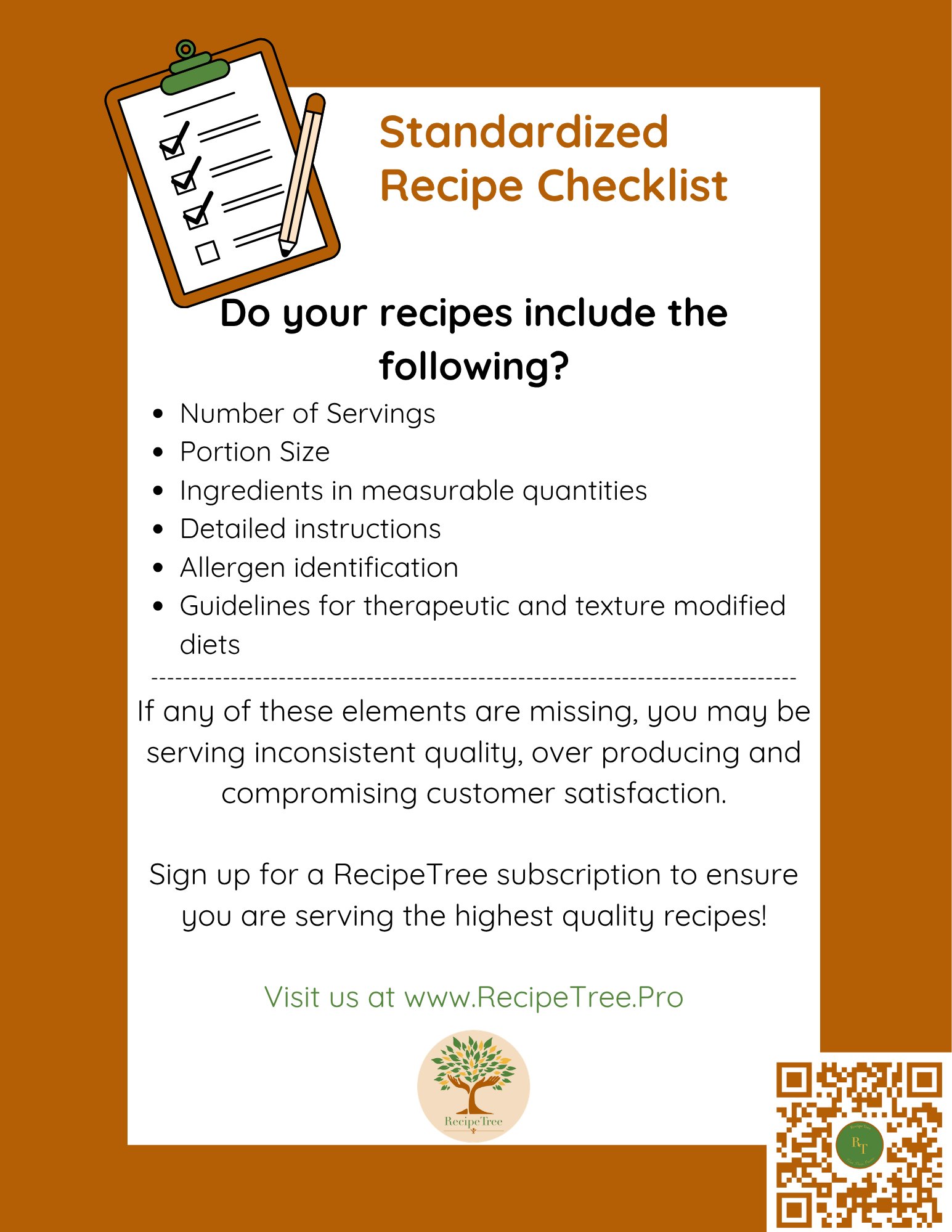
Six Elements Every Recipe Should Include
A recipe should begin with the number of servings it produces. This allows the culinary team to plan production accurately, scale recipes to match census, and avoid preparing too much or too little food.
Portion size is equally important. A recipe may yield 50 servings, but staff also need to know whether each serving is a half cup, four ounces, one scoop, or another defined amount. Clear portion guidance supports consistency on the plate and helps with food cost control.
Ingredients should always be listed in measurable quantities. Terms such as “some,” “a little,” or “to taste” can create confusion and lead to inconsistent flavor, texture, and yield. Measured ingredients help ensure that every batch is prepared as intended.
Detailed instructions give staff a reliable process to follow. Instructions should include preparation steps, cooking methods, temperatures, timing, and any important quality cues. The more clearly the process is documented, the easier it is to train new team members and maintain consistent results.
Allergen identification is another essential component. Clearly identifying allergens helps teams make informed decisions when serving residents with food allergies or sensitivities and supports safer meal service.
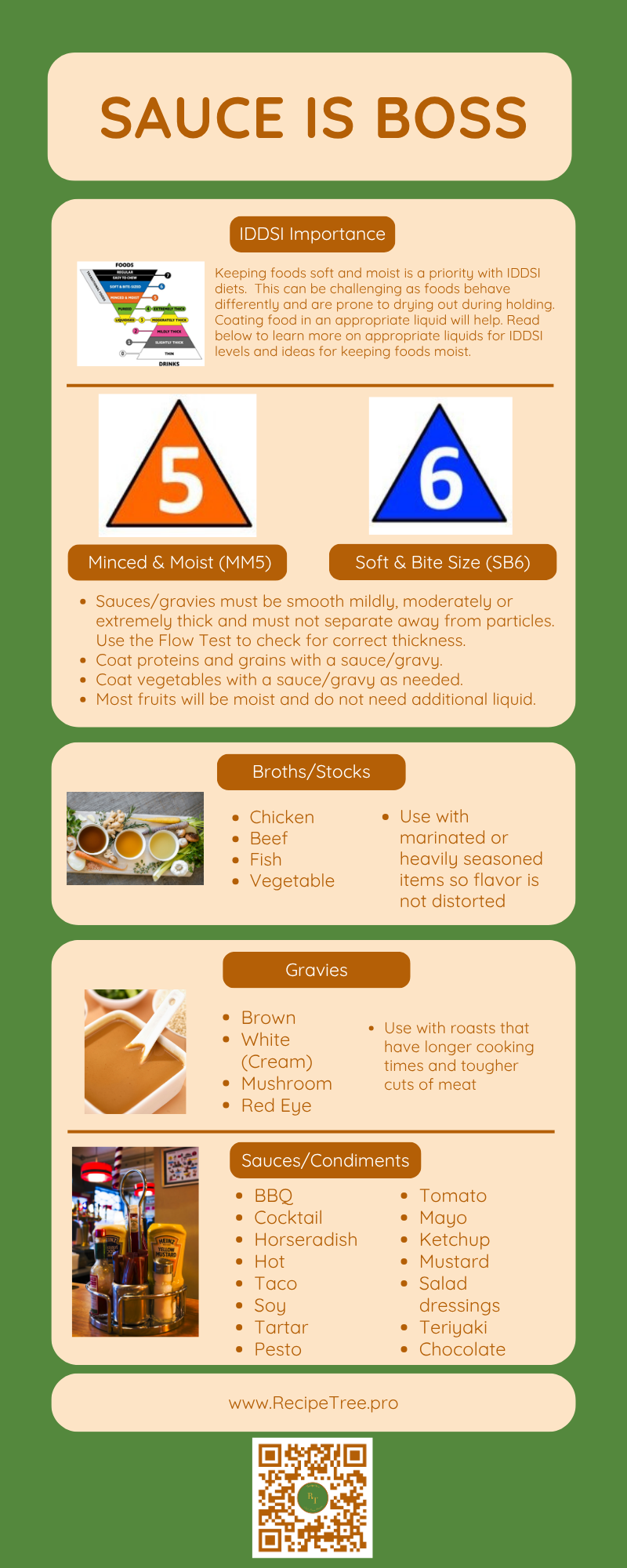
Finally, recipes should include guidance for therapeutic and texture-modified diets. This may include notes about appropriate substitutions, modifications, or related recipes for residents who require altered sodium, carbohydrate, renal, gluten-free, or IDDSI texture-modified options. These details help teams provide inclusive meals without compromising safety or quality.
What Happens When Recipe Details Are Missing?
Without standardized recipes, staff may prepare the same menu item differently from shift to shift. One cook may use more seasoning, another may serve a larger portion, and another may substitute ingredients without understanding the impact on allergens, nutrition, or texture.
These inconsistencies can lead to overproduction, increased food waste, unpredictable costs, and resident dissatisfaction. They can also make staff training more difficult and create unnecessary stress for culinary teams already managing busy meal periods.
In healthcare dining, the consequences can be even more significant when therapeutic diet guidance or texture-modified instructions are missing. A recipe that does not clearly identify how to adapt a dish may leave staff uncertain about how to serve it safely to residents with specific dietary needs.
Standardization Supports Better Dining Experiences
Standardized recipes help culinary teams deliver meals that residents can count on. When a favorite soup, entrée, or dessert tastes and looks the same each time it is served, residents build trust in the dining experience.
They also help communities preserve the recipes that make their dining programs unique. Whether a recipe is a longtime resident favorite, a signature dish from the chef, or a culturally inspired menu item, standardization makes it easier to maintain quality as staffing changes.
Build a Recipe System That Works for Your Team
A strong recipe system should make it easy to find, follow, scale, and customize recipes. It should support menu planning, staff training, allergen awareness, and the dietary needs of the residents you serve.
Start by reviewing your current recipe collection. Do your recipes include a defined yield, portion size, measurable ingredients, detailed instructions, allergen information, and therapeutic or texture-modified diet guidance? If not, prioritize the recipes your team uses most often and begin standardizing them one at a time.
A clear recipe is more than a kitchen document. It is a foundation for consistent quality, safer service, better cost management, and a more satisfying dining experience for every resident.